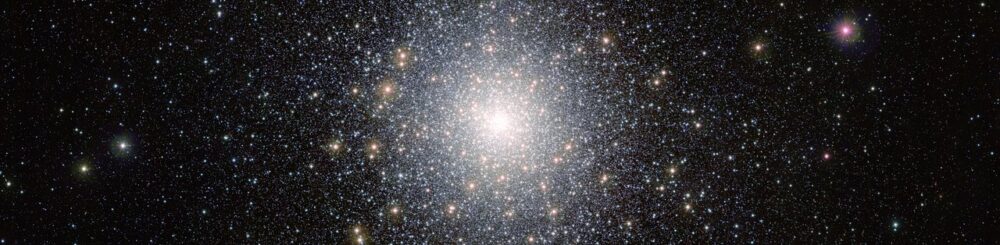
Globular clusters (GCs) are dense stellar systems, with ages comparable to the age of the Universe, which are found in nearly all galaxies. Thanks to the revolutionary observations of the Hubble Space Telescope (HST) and follow-up spectroscopy from the ground, we discovered that most stars in GCs have anomalous abundances, in the form of increased helium abundances and variations in other light elements. These abundances are telltales of hydrogen burning at temperatures well in excess of the central temperatures of the stars themselves. All old GCs display these “multiple populations” (MPs), but they have remained elusive in young massive clusters and their origin is shrouded in mystery. A long-standing question that this proposal aims to address is: “What is the origin of these anomalous light-element abundances?” We will investigate the scenario in which extremely massive stars (~103 solar masses) – that may have existed in GCs in the early Universe – polluted GCs during their formation. The novelty of this project lies in the combination of hitherto disconnected approaches, using space and ground-based observations, stellar evolution and nucleosynthesis calculations and direct modelling of GC formation. This project will shed light on the formation of GCs at high redshift and provide insights into fundamental problems in astrophysics, such as the stellar initial mass function (IMF) and star and galaxy formation at high redshift. Solving this problem now is timely due to our ability to directly observe GC formation in the earliest phases of galaxy formation with the James Webb Space Telescope (JWST).

The Origin of Multiple Populations in Globular Clusters
ISSI Team 25-636 led by Gieles M. & Padoan P.