
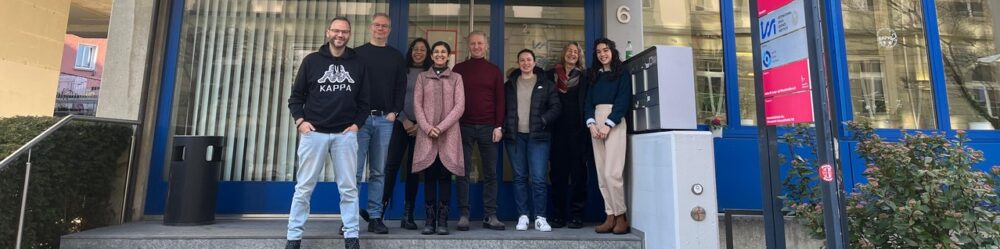
- Paul Beck: Instituto de Astrofisica de Canarias (Tenerife, Spain). Paul brings expertise in asteroseismology of solar-like oscillators, stellar structure and evolution, rotation and activity, Stellar binarity in advanced evolutionary phases. He will help team with observational stellar physics.
- Allan Sacha Brun: DRF/IRFU/Département d’Astrophysique & AIM, CEA, CNRS, Universities Paris-Saclay & Paris Cité (France). Expert in high performance (HPC) numerical simulations, Expert in the Sun, stars and their interactions with planets, Space Weather, Astrophysical fluid and plasma dynamics, interpretation of space data, development of theoretical & numerical tools & pipelines. He will provide team with expertise of numerical solar and stellar dynamo.
- Mausumi Dikpati: High Altitude Observatory, NCAR (USA). Expert in solar dynamo theory, tachocline instabilities, magnetic Rossby waves and activity cycles on the Sun. She will provide team with her expertise in numerical simulation of solar dynamo and Rossby waves.
- Moira Jardine: School of Physics and Astronomy, University of St Andrews (UK). Jardine is an expert in the structure and dynamics of stellar magnetic fields. She pioneered the theoretical modelling of stellar coronal structure using Zeeman-Doppler images of the surface magnetic fields as inputs. She has developed models of the formation and support of stellar prominences and the derivations of stellar wind mass loss rates from prominence observations. She will contribute this expertise in modelling and a broad background knowledge of stellar magnetic fields to the project.
- Antonino Francesco Lanza: The Astrophysical Observatory of Catania, The Italian National Institute for Astrophysics (Italy). Expert in the interaction between extrasolar planets and their host stars, the physical processes related to stellar rotation and magnetic fields in late-type stars. He now works for the science management of PLATO, an ESA mission that will discover exoplanets and study their evolution with the most advanced methods of Astrophysics.
- Savita Mathur: Instituto de Astrofisica de Canarias (Tenerife, Spain). Savita mainly focuses on Astrophysics, Astronomy, Stars, Asteroseismology and Solar-like oscillations. She conducts interdisciplinary study in the fields of Astrophysics and Oscillation through her works. Her work on Kepler and Photometry is typically connected to Scaling as part of general Stars study, connecting several disciplines of science. Her Asteroseismology study frequently draws parallels with other fields,
such as Stellar structure. Her Solar-like oscillations research incorporates elements of Red clump, Effective temperature and Main sequence. Her Exoplanet study combines topics from a wide range of disciplines, such as Planetary system and Radius. - Ângela R. G. Santos: Instituto de Astrofísica e Ciências do Espaço (Portugal). Angela Santos brings expertise in data analysis for solar and stellar observations, often contributing to the solar-stellar connection. Her experience includes long-term brightness variations due to active regions, as well as short-term brightness variations due to acoustic oscillations. Ângela has used asteroseismology to learn about stellar magnetism and, for a particular star, to help detect and characterize its activity cycle leading to the discovery of the metallicity impact on magnetic-activity evolution. Ângela’s expertise aligns perfectly with the goals of the proposed international team.
-
Rafael A. García. His research is devoted to studying the structure and evolution of solar-like pulsating stars from the main sequence to red giants using seismic techniques to probe solar and stellar interiors. In particular, he is interested in solar and stellar dynamics, including internal angular momentum evolution and stellar magnetic cycles.
- Travis Metcalfe: White Dwarf Research Corporation (USA). Travis is an expert in stellar astrophysics and the solar-stellar connection, including asteroseismology and spectropolarimetry of solar-type stars, as well as rotational evolution and long-term observations of stellar magnetic activity cycles.
- Ramon Oliver: Universitat de les Illes Balears (Spain). Expertise in variations with Rieger and other short-term periodicities of various solar activity indicators: sunspot area, sunspot numbers, photospheric flux in active regions. He also studied the statistical behaviour of the North-South asymmetry of solar activity and the role of magnetic Rossby waves as triggers of the short-term periodicities. He will help team with his expertise of solar activity cycles.
- Ansgar Reiners: Institut für Astrophysik und Geophysik, Georg-August-Univ. Göttingen (Germany). Ansgar brings expertise in theory and observation of magnetic activity and dynamos in stars, brown dwarfs, and planets, exoplanets, high resolution spectroscopy and development of instrumentation.
- Steven Michael Tobias: School of Mathematics, University of Leeds (UK). Expert in Geophysical and Astrophysical fluid dynamics and dynamo theory. He utilises theoretical and computational methods and dynamical systems for fluid dynamics, astrophysical, geophysical and experimental. He will provide the team with his expertise in numerical simulations of solar and stellar dynamo.
- Teimuraz V. Zaqarashvili (team leader): University of Graz (Austria) and Ilia State University (Georgia). Expert in the theory and observations of solar atmosphere and interior, stellar activity and stellar-planetary interaction. Role in project: to organise the preparation and submission of the proposal, to coordinate the schedule of talks during meetings, to finalise the schedule of team meetings in collaboration with ISSI, to set up and maintain a website at ISSI, acknowledge ISSI in the published papers under the project, organise the final review paper in Space Science Reviews.
Young researchers
- Eka Gurgenashvili, Ilia State University, Georgia.
- Gabriela Santos Lapa, Institut für Astrophysik und Geophysik, Georg-August-Univ. Göttingen (Germany).