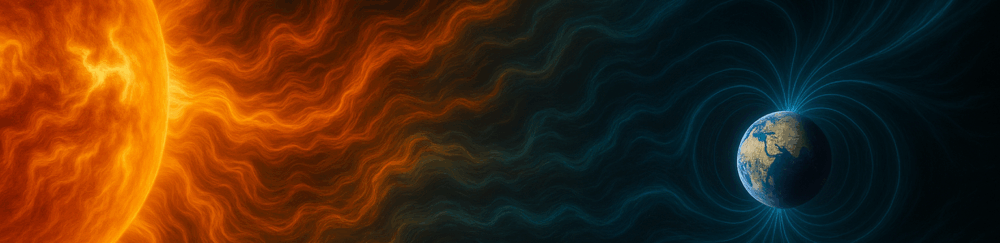
The solar wind is a unique laboratory for investigations of space plasma, and understanding its evolution is the central question of heliophysics. From decades of in situ observations of particle Velocity Distribution Function (VDF), it is well known that the non-thermal parts of the VDF, such as ion beams, are intimately linked to wave-particle interactions, which lead the plasma toward quasi-steady non-equilibrium states. The theoretical effort in linear, quasi-linear (QL), and non-linear (NL) frameworks describes a plethora of fundamental mechanisms present in the plasma at multiple spatial and time scales. Although our understanding of physical processes is highly advanced, their relative importance and abundance of non-thermal features in the solar wind must be constrained by observational input and highlight areas where further theoretical work is necessary. Parker Solar Probe (PSP) and Solar Orbiter (SolO) provide observations in the young solar wind and significant upgrades to measurement resolution and cadence compared to previous missions. With the two missions’ datasets reaching maturity in terms of confidence and volume, and, in particular, the PSP reaching closest perihelion of 9.5 Rs, this project aims to bring together experts from theory, simulation, and observational subfields to answer the question “How to combine multiscale theoretical plasma models, linear, QL and NL, to successfully decipher the kinetic processes involved in the evolution of the solar wind?” Taking advantage of the new theories and modeling tools, we will achieve two objectives: 1) we will perform a comprehensive comparison of the measurements of proton and α-particle secondary populations with current linear and QL theories. These findings will: i) reveal the kinetic description of VDF evolution at gyrokinetic scales, and ii) provide parameter constraints for NL simulations of macroscopic evolution, and 2) we will employ particle-in-cell (PIC) and hybrid simulations to couple small-scale modeling with large-scale effects of expansion and collisions. The synergy of the two approaches will naturally lead to advanced multi-scale models of solar wind propagation in the inner heliosphere.

Multiscale Investigation of Kinetic Processes Governing Solar Wind Evolution
ISSI Team 25-650 led by Martinovic M., López R.A. & Shaaban S.M.