
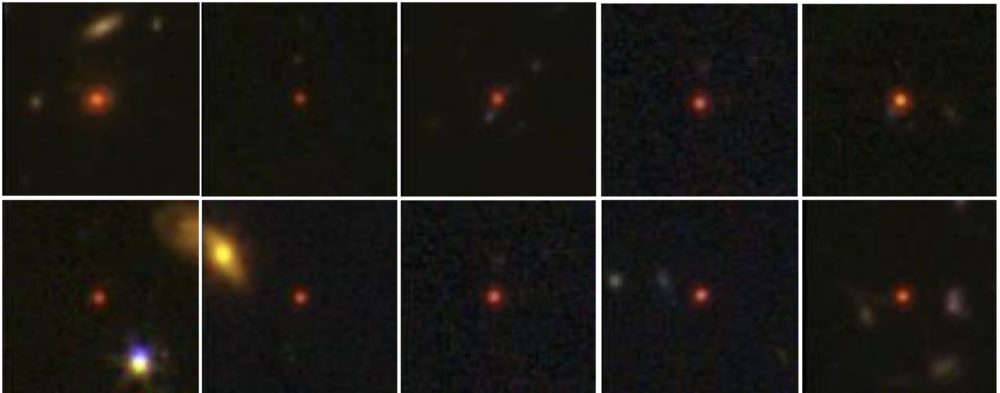
The James Webb Space Telescope (JWST) has uncovered a mysterious population of extremely compact, red sources at high redshift – so-called “Little Red Dots” (LRDs). Found ubiquitously across JWST fields, these objects exhibit broad Balmer lines (>1000 km/s), peculiar V-shaped spectral energy distributions (SEDs), and a diversity of properties that challenge conventional classification. Are LRDs the earliest growing black holes with unprecedented gas densities? Or could they be ultra-massive, extremely compact galaxies whose stellar kinematics mimic broad-line emission? Despite extensive studies, no consensus has emerged, making LRDs one of JWST’s most intriguing and debated discoveries.
Our ISSI team will unite leading experts in multi-wavelength observations, theoretical modeling, and JWST instrumentation to investigate the nature and significance of LRDs. We will leverage the rapidly expanding JWST archive and complementary data from ALMA and Chandra to characterize their SEDs, AGN signatures, and environments. Through two focused workshops, we will develop new analysis techniques, refine theoretical models, and explore synergies with ongoing and future surveys. A key goal is to investigate the nature of LRDs and to determine their role and significance in our understanding of early galaxy evolution and black hole growth.
The ISSI framework provides a unique opportunity to coordinate efforts across the international community, preparing the groundwork for upcoming proposals and publications. By uniting diverse perspectives, our team aims to transform JWST’s LRDs from intriguing enigmas into a cornerstone of early galaxy and black hole studies.